

N95 vs. KN95 vs. 3-Ply Masks: Which One Do You Actually Need?
Walk into any conversation about respiratory protection and you'll hear three terms tossed around almost interchangeably: N95, KN95, and surgical masks. But treating them as the same can leave you either over-spending on protection you don't need — or under-protected when it matters most.
Here's the breakdown you actually need.
The N95: The American Gold Standard
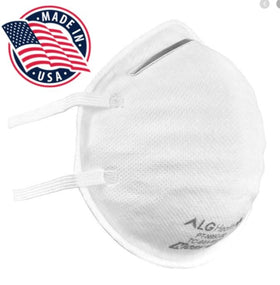
The N95 is certified by NIOSH — the National Institute for Occupational Safety and Health — and it's held to some of the strictest respiratory protection standards in the world. The "95" refers to the mask's ability to filter out at least 95% of airborne particles, including very fine particles as small as 0.3 microns.
What makes N95 masks stand apart isn't just the filtration number. It's the fit. A true N95 forms a tight seal against the face, which means the air you breathe actually passes through the filter — not around it. This is why NIOSH-certified N95 masks are the preferred choice in healthcare settings, construction sites, wildfire evacuation zones, and anywhere fine particulate or airborne pathogens are a genuine concern.
If you're shopping N95s, look for the NIOSH certification marking directly on the mask and check the TC approval number. Masks made by brands like ALG — manufactured right here in Ohio — carry full NIOSH certification and are a direct alternative to the 3M 8210 and 3M Aura that healthcare workers know well.
Best for: Healthcare workers, high-risk individuals, construction and industrial environments, wildfire smoke exposure, crowded public spaces where you want maximum protection.
The KN95: China's Equivalent Standard
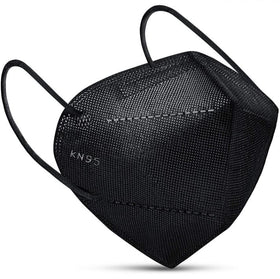
KN95 masks are the Chinese regulatory equivalent of the N95. They're also rated to filter 95% of airborne particles, but they're certified under a different standard (GB2626-2019) and tested using slightly different protocols.
During the height of the COVID-19 pandemic, the FDA authorized many KN95 masks under Emergency Use Authorization, and the CDC tested large batches — which is why you'll see CDC test reports referenced for KN95 products sold in the U.S. today.
A properly manufactured KN95 from a reputable brand offers strong respiratory protection. The key phrase there is properly manufactured — the KN95 market saw a flood of counterfeits during 2020 and 2021. That's why sourcing matters. Masks from brands on the FDA's Appendix A list, or those with verifiable CDC test reports, are the ones worth your money.
Best for: Everyday high-risk scenarios, people who find N95s uncomfortable, budget-conscious buyers who still want strong filtration, bulk purchasing for families or small businesses.
The 3-Ply Surgical Mask: The Everyday Workhorse
The 3-ply surgical mask — also called a disposable procedure mask — is what most people picture when they think "face mask." It consists of three layers: an outer fluid-resistant layer, a middle melt-blown filter layer, and a soft inner layer against your face.
Medical-grade 3-ply masks provide 98%+ bacterial filtration efficiency (BFE). What they don't provide is the same tight facial seal as an N95 or KN95. Air can leak around the edges, which limits their effectiveness against very fine airborne particles.
That said, for many everyday situations — a quick trip to the pharmacy, a flight where you want source control, a workplace where respiratory risk is low — a quality 3-ply surgical mask is perfectly adequate and significantly more comfortable for extended wear.
Best for: Everyday errands, source control (protecting others from you), lower-risk environments, kids who find respirator masks uncomfortable, anyone who needs to wear a mask for long stretches throughout the day.